4.1.1 Statement of Applicability (SoA)

The scope of the company’s ISO 20252: 2019 encompasses the delivery of behavioral market research based on ecommerce experiences.
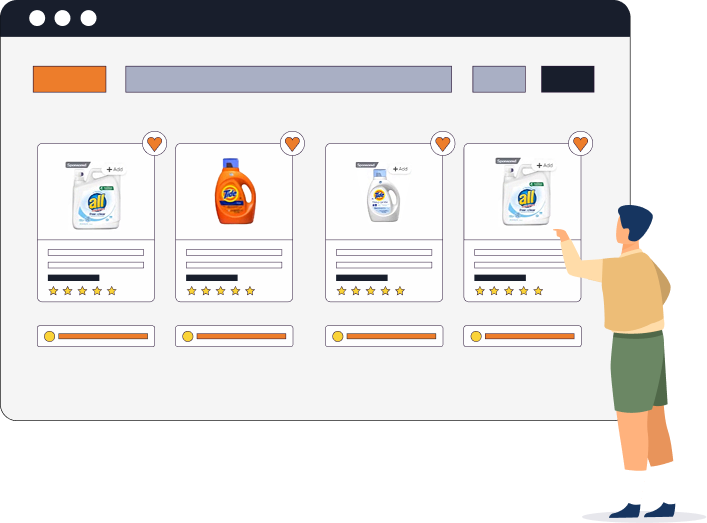
Result page example

Our Behavioral Testing
Methodologies

Our methodologies are built on the principle of simulating real-world e-commerce and digital retail environments to capture authentic behavioral data, ensuring highly predictive results.

1. Concept Development & Evaluation

These tools transform abstract ideas into market-ready concepts and rigorously test their in-market potential.
Innovation Text-to-Shopper-Friendly Creation & Test
  • Purpose: To move clients from abstract, theoretical, text-based concept descriptions to tangible, realistic execution material.
  • Methodology: We facilitate the creation of a complete, shopper-friendly digital product page and all associated content (product imagery, benefit visualizations, descriptions).
  • Result: This execution material is then used in the subsequent Behavioral Concept Test, allowing clients to test how consumers will truly react to the product as it would appear in an e-commerce environment, leading to more predictive results than traditional methods.
Béhavioral Concept Test
  • Purpose: To achieve accurate sales forecasts by observing unconscious, natural shopper choices rather than stated intent
  • Methodology: We deploy a sophisticated simulation that recreates an authentic e-commerce shopping experience, specifically optimized for a mobile phone environment (instead of trying to recreate a physical shelf).
  • Result: This simulation ensures a smooth, realistic shopping journey, prompting consumers to make unconscious, natural choices.

2. Pricing and Revenue Optimization

These methodologies determine optimal pricing and revenue strategy by testing decisions in a competitive, behavioral context.
Innovation Text-to-Shopper-Friendly Creation & Test
  • Purpose: To determine optimal pricing and true price elasticity by simulating a competitive purchase decision, outperforming traditional methods (PSM, Gabor-Granger).
  • Methodology: To determine optimal pricing and true price elasticity by simulating a competitive purchase decision, outperforming traditional methods (PSM, Gabor-Granger).
  • 1. Behavioral Input: The respondent inputs a price they believe is fair for the unpriced tested product.
    2. Purchase Decision: The store reloads with the tested product at the inputted price, and the respondent makes a final competitive purchase.
  • Key Insight: This approach reveals that price elasticity is not a simple bell curve; the demand curve often shows multiple spikes ("sweet spots") where price changes trigger a significant shift in sales due to competitive dynamics. This provides a more accurate forecast for maximizing competitive advantage.
Kiosk Revenue Growth Management (RGM) Test
  • Purpose: To optimize the digital menu interface and pricing strategy for maximum profitability in fast-food environments utilizing self-ordering kiosks.
  • Methodology: Recreates the entire digital kiosk ordering experience in a high-fidelity simulation. Respondents are guided through realistic shopping situations (e.g., ordering for a family).
  • Insights: By simulating various scenarios (Menu Engineering, Pricing & Promotion changes), we precisely measure the impact on key business metrics like Revenues, Profit, Average Order Value (AOV), and other specific objectives. This provides a data-driven path to optimizing the digital menu.

3. E-commerce Execution and Conversion Testing

This specialized methodology focuses on optimizing the visual and content assets that directly drive online sales performance.
E-commerce Results and Product Pages Test
  • Purpose: To optimize specific visual and textual elements on an e-commerce product page to drive conversion and engagement.
  • Methodology: Involves recreating a realistic e-commerce retailer environment and directing respondents through a simulated shopping trip to isolate the impact of different page components.
  • Result: Generates clear, behavioral data on content strategies that yield the highest engagement and purchase intent, providing actionable direction for improving Conversion Rates (CR) and Add-to-Cart Rates (ATC) on live retailer sites
  • Tested Assets: We systematically vary and evaluate the effectiveness of:
  • Primary Image: Capturing immediate attention from search results.
  • Secondary Image Gallery Set: Capturing immediate attention from search results.
  • A+ Merchandising / Enhanced Content: Rich media (charts, videos) used to overcome final purchase hurdles.
The company attests to the following Statement of Applicability and Annexes as meeting the requirements of ISO 20252: 2019.
ANNEX ATTESTED EXCLUDED EXCLUSION EXPLANATION
Annex A Sampling Sampling according to project scope Not doing sampling work
Annex A Access Panel Corporate Panel management Not managing a panel
Annex B Fieldwork Data collection: Telephone or CATI Qualitative l Quantitative fieldwork Not doing telephone or CATI
Annex C Physical observation Fieldwork observational data collection Not doing physical observation
Annex D Digital observation Electronic data collection using passive methodologies Attested
Annex E Self completion Invited participants self-complete surveys Attested
Annex F Data management and processing involving manual data entry l electronic data entry l coding / editing l analysis Attested